How to get there, Where to stay and What to do (2026)
As we sat down to start planning where we would be spending our four-month trip across Southeast Asia, we knew for certain we would be heading to Indonesia at the beginning and it definitely wasn’t going to be Bali. We were craving adventure and wanting to see remote islands rarely visited by tourists and that’s when we started to think about the island of Sulawesi.
Sulawesi was an area of Indonesia we knew little about and as we dug deeper, two great snorkelling locations kept coming up - the Togean Islands and Bunaken Island. The decision was made and we planned a start in Makassar (South Sulawesi) and by heading north, we could get to the Togean Islands (Central Sulawesi) and then on to Bunaken Island (North Sulawesi). A snorkeler’s dream….
Hidden deep in Indonesia, this is the kind of adventurous travel that seems completely untouched. Remote islands, tiny local villages, long boat rides across the open ocean, and crystal-clear water in every direction. Perfect for what we were looking for.
The Togean Islands are not a place that we knew a lot about before we left to start travelling full-time and even after visiting, we want to experience so much more.
*The Togean Islands can be spelled either as Togean of Togian - for this guide, we have used Togean.
Where are the Togean Islands?
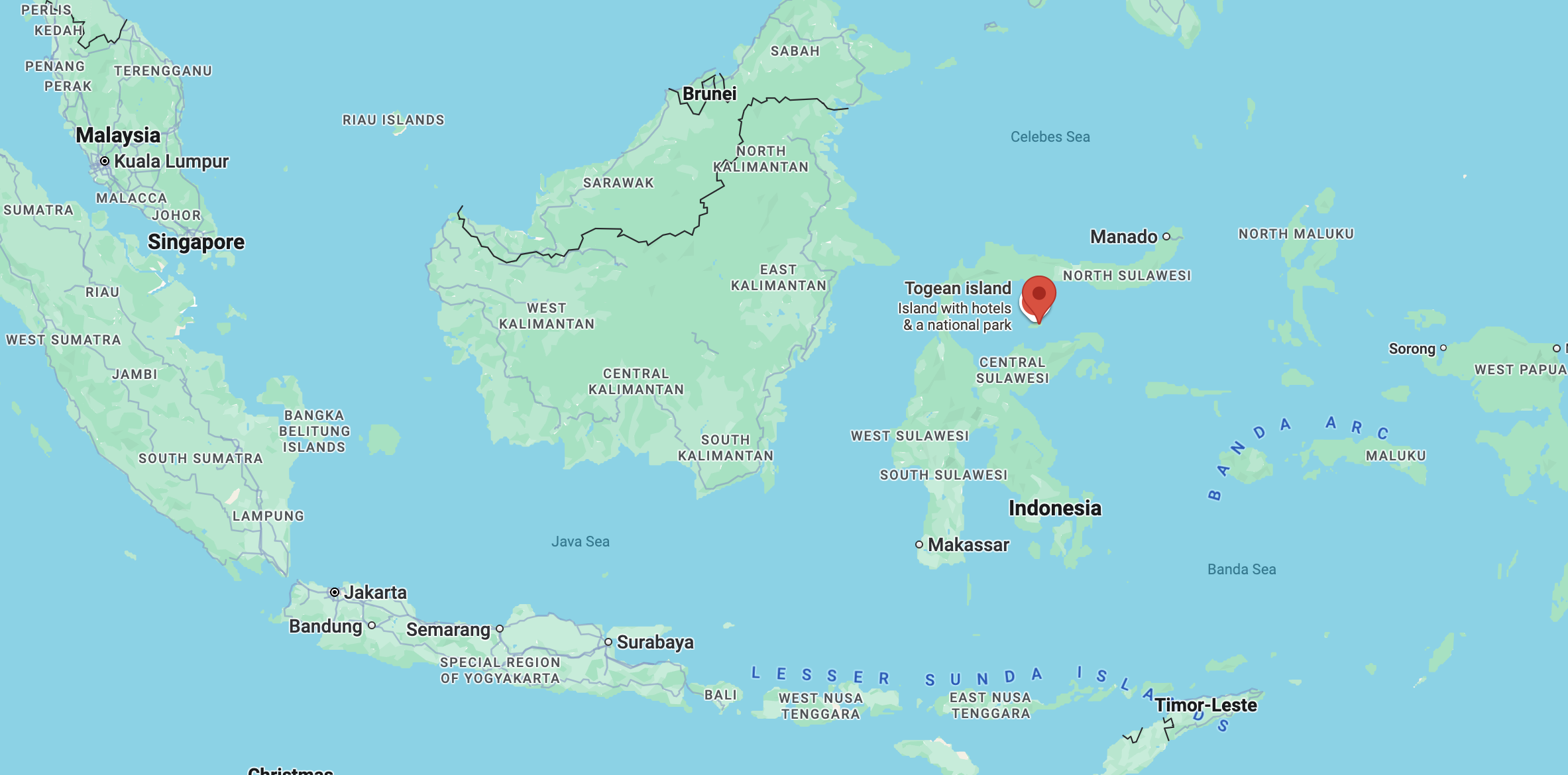
Location of Togean Islands in Sulawesi
Located on the east coast of Central Sulawesi, the Togeans are a group of 56 islands within the Gulf of Tomini. The islands are home to fewer than 50,000 people across some 50 villages, including the Bajau people (Sea Gypsies). The Bajau people are a nomadic community who live mainly in stilt villages across coral reefs; however, in the past, they were known to live on floating houseboats and rely solely on ocean diets. They are widely known now for their free-diving abilities.
This is a remote part of the world, however, it is becoming increasingly modernised despite the level of poverty that exists. The isolation of the Togean Islands has helped to preserve and maintain their pristine beaches, clear waters and the laid-back lifestyle. Pelan-Pelan (slowly-slowly) is a common term here, however, modern resorts are starting to creep further into the islands, which brings with it an ongoing complexity for the local people.
At the moment (2026), this is still a remote paradise hidden from the tourist crowds and, depending on what you are after, will give you an authentic Indonesian island experience. Long may it stay that way.
How to get to the Togean Islands?
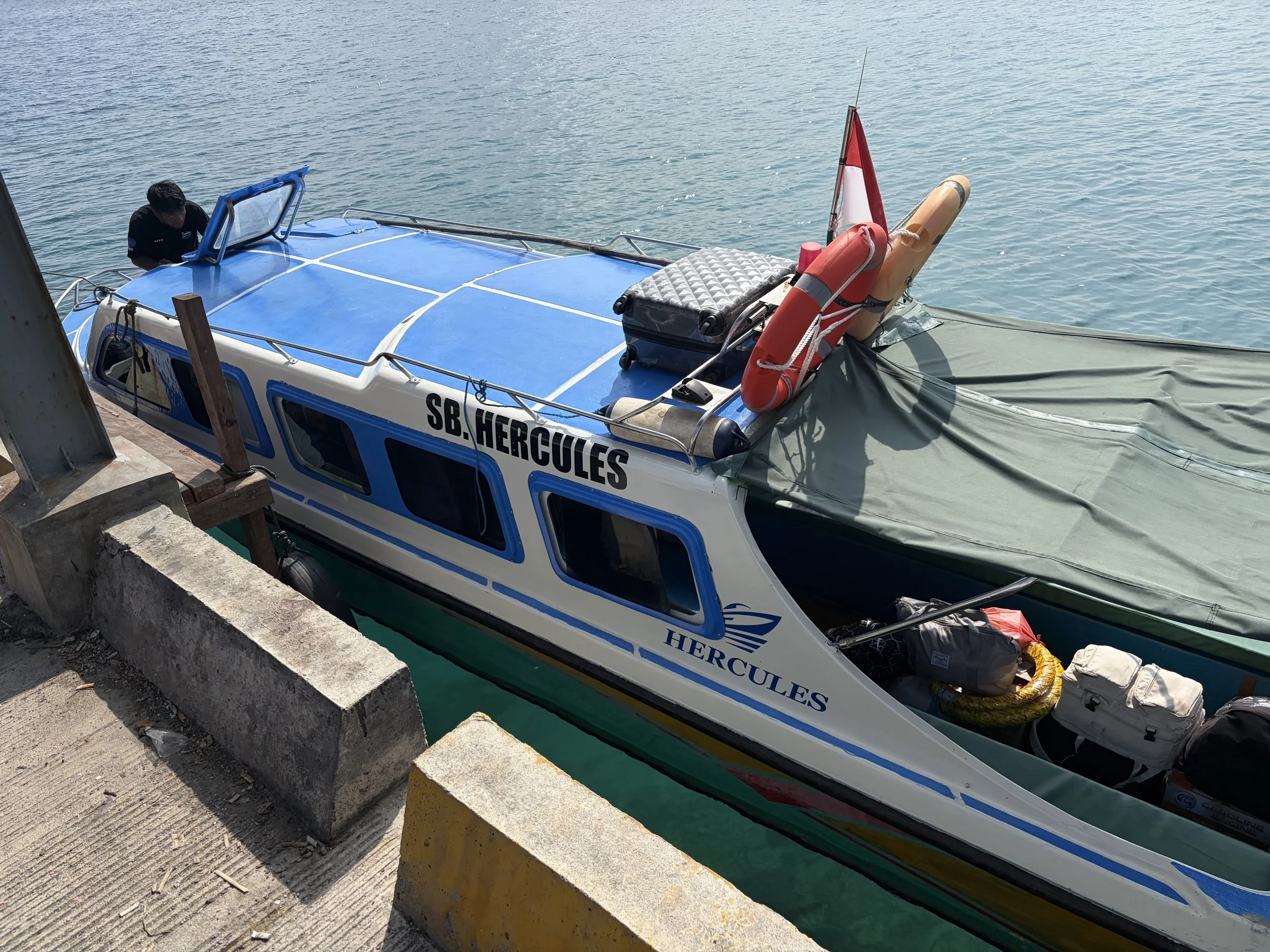
The Hercules Ferry in Ampana
For us, we were coming to Sulawesi after a liveaboard that finished in Labuan Bajo, Flores (See Above). So our easiest approach was to come from the south of Sulawesi and make our way north from there. We flew into Makassar in South Sulawesi and then took a flight to Luwuk Airport. We reached out to our accommodation, who put us in touch with a driver, who then drove us the 6-7 hours from Luwuk to Ampana to catch the ferry to the Togeans the next day. As it turned out, our driver also assisted us with getting tickets for the ferry to our island, so it was easy to bundle it all together.
The flight to Luwuk Airport was easy and we flew with Lion Air from Makassar. Our driver from Luwuk charged us 1,000,000 IDR ($ 81.25 AUD) to get us to Ampana. The trip distance is about 230km but given the state of the roads and the traffic, it can take up to 7 hours travel time in the car.
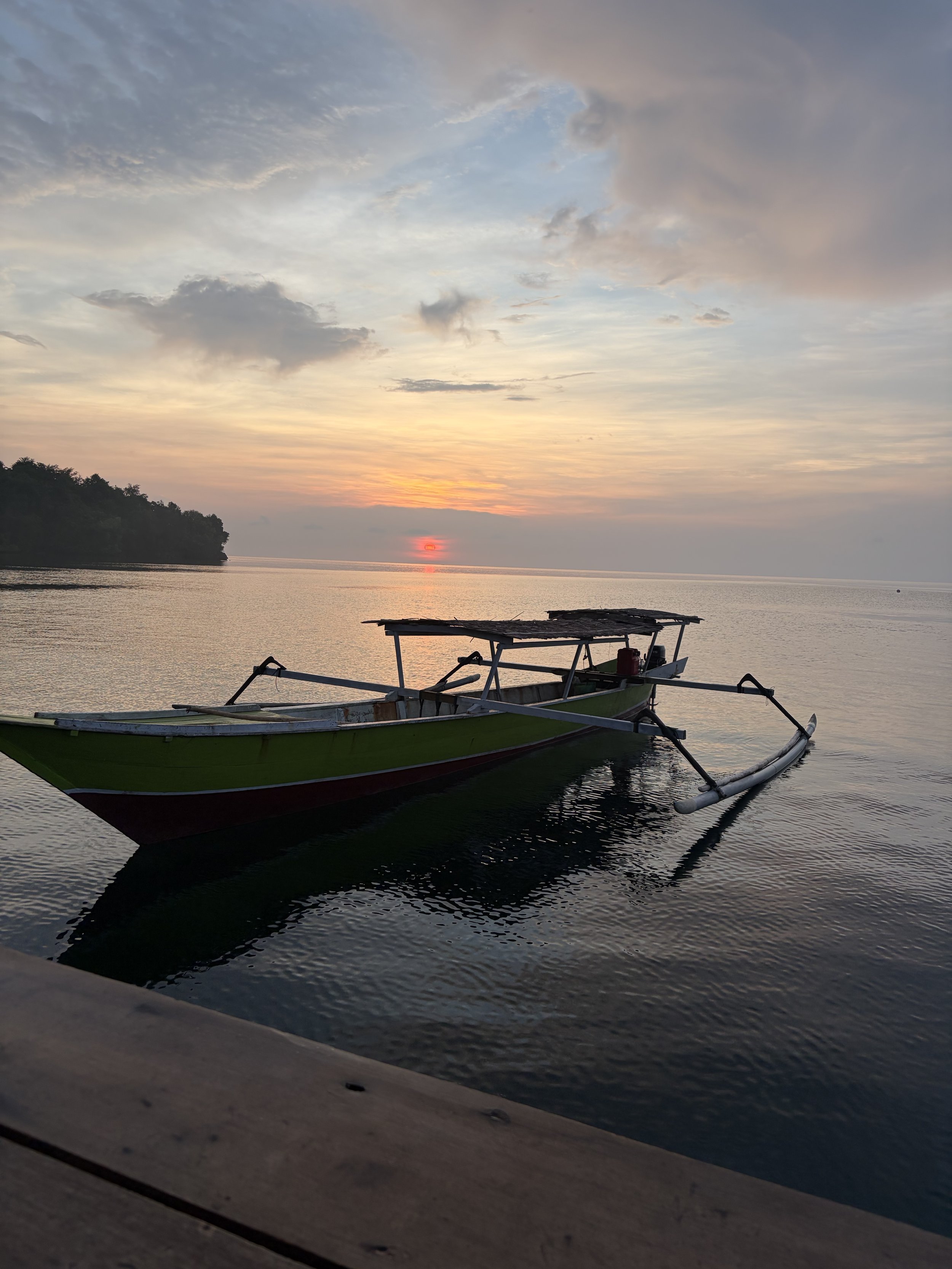
We decided to stay in Ampana that night and catch the ferry the next day. The following day, the ferry dropped us off at a dive resort in Bomba and then our accommodation picked us up from there in a long boat. The ferry cost us 320,000 IDR for two people ($29.25 AUD). We stayed at a lovely homestay called Triple R Homestay in Ampana. The accommodation was in a bungalow, which was clean and tidy. The owner served us a great breakfast before we headed to the ferry.
Booking details: Triple R Homestay
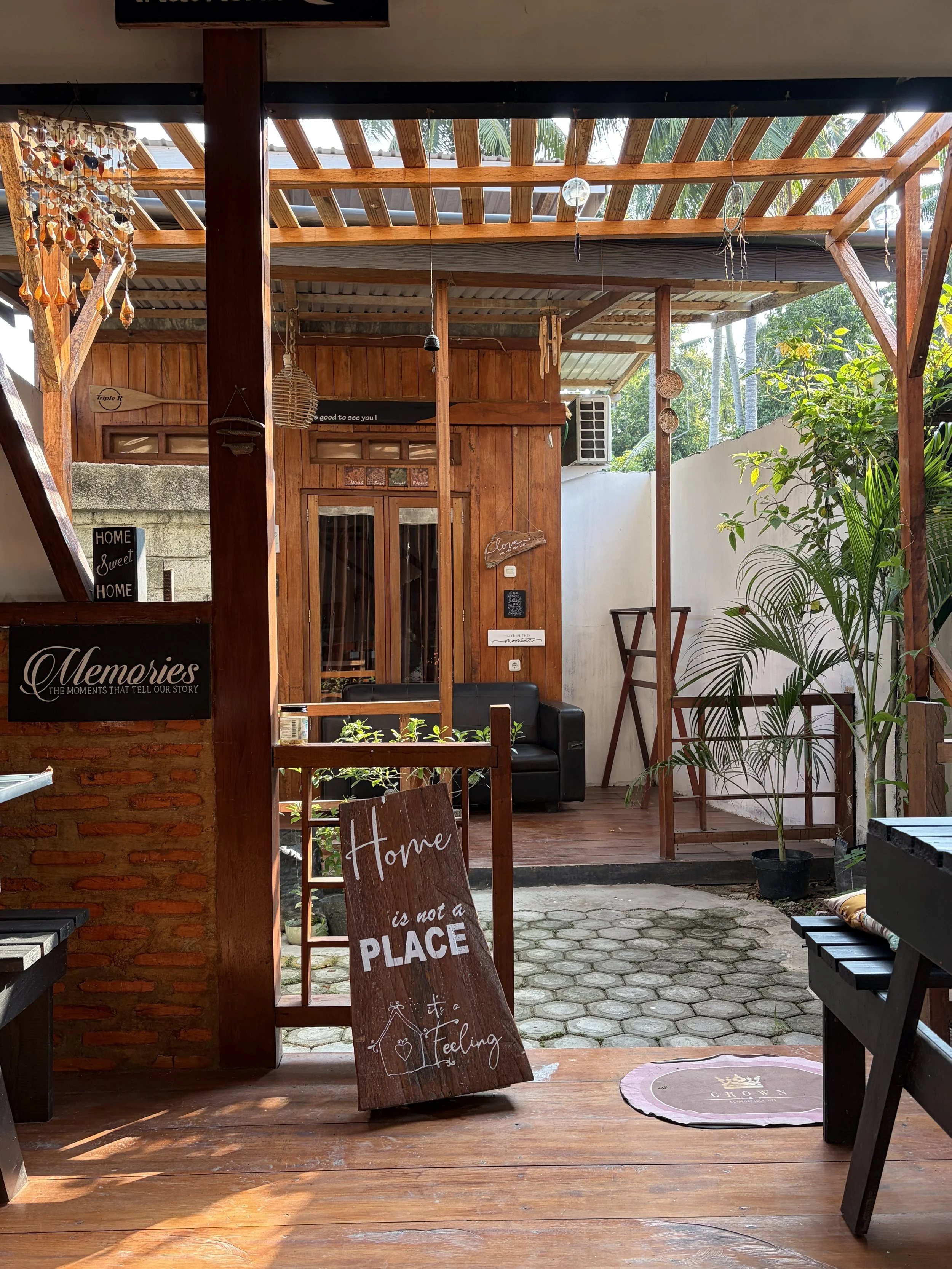
Triple R Homestay Ampana
You will also need to pay park fees for entering the Togean Islands, which you can pay at the wharf, which for two people cost us 300,000 IDR ($23.86 AUD).
After we left the Togeans, we intended to catch the overnight ferry to Gorontalo and make our way north; however, for May 2026, the ferry that heads that way was in dry dock for maintenance, so we had no other choice but to head back to Ampana and Luwuk to then fly to Manado. Lots of people usually do the overnight trip on the ferry to Gorontolo and then head north - but we weren’t able to go that way this time around.
Here is a great reference on ferry times and how to get to the Togeans, which our accommodation provided us (2026) https://www.pokipoki.land/gettingthere
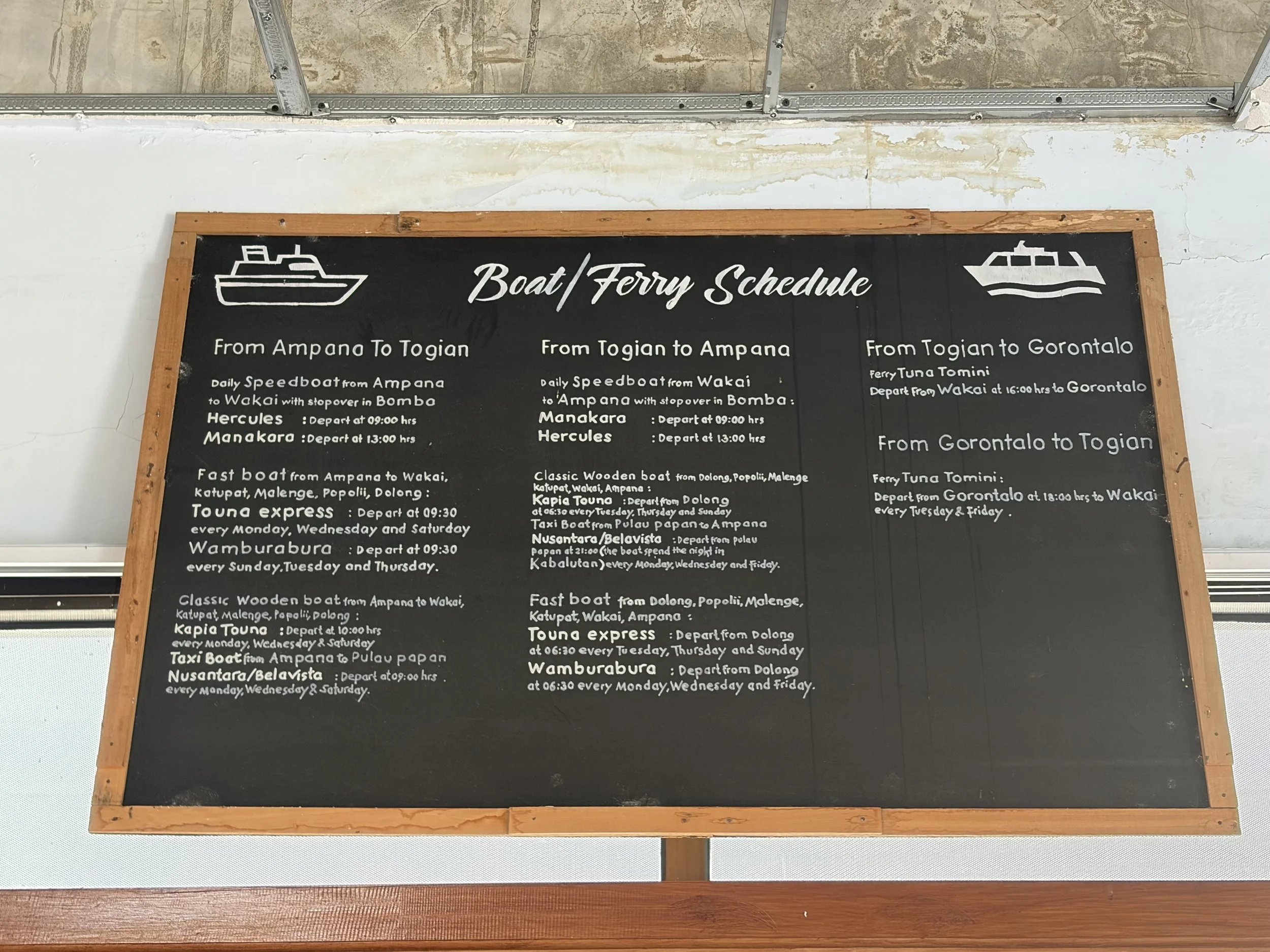
Photo of ferry schedule in Ampana tourism office (2026)
The best time to go to the Togean Islands?
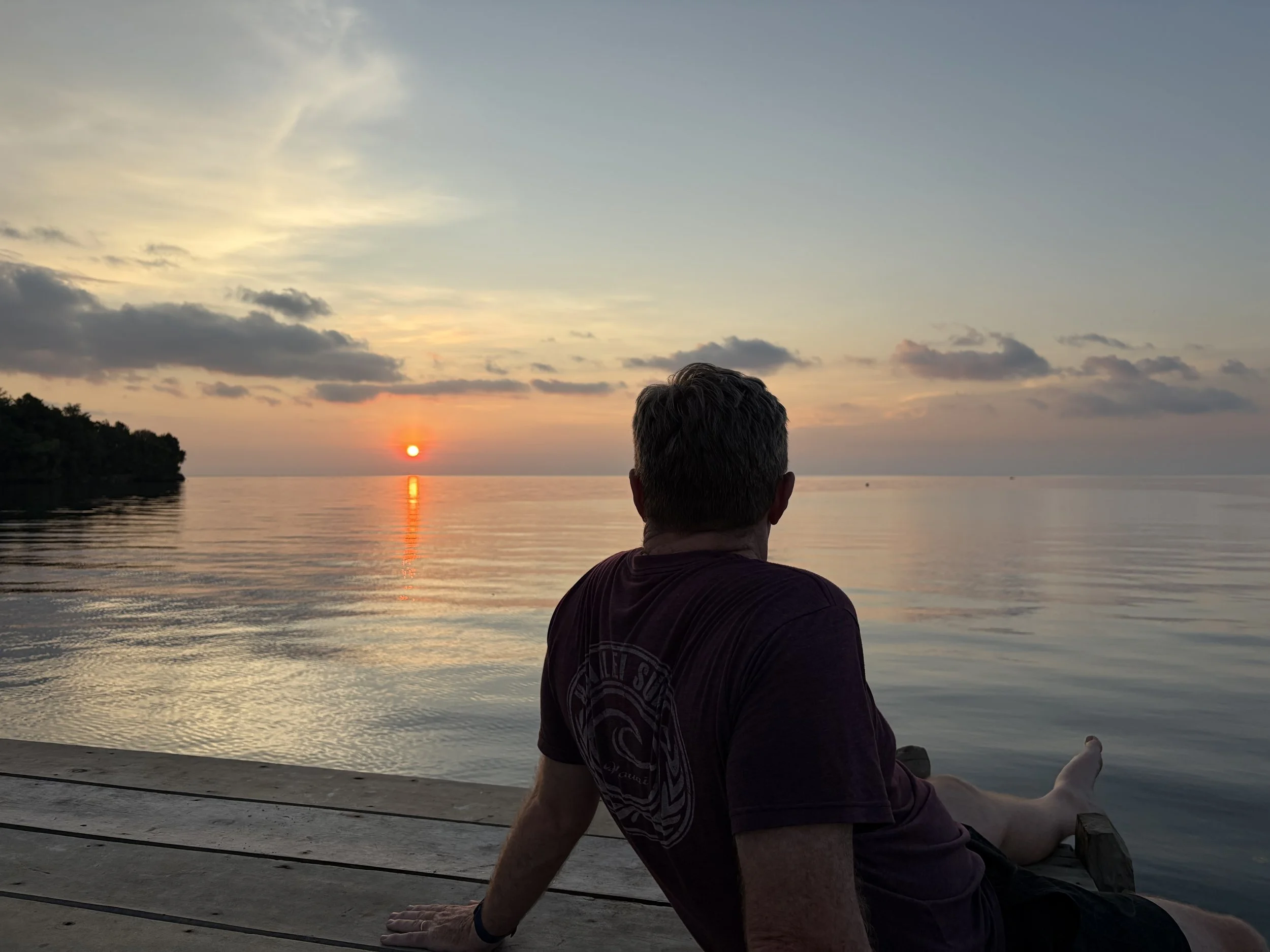
Sunset from the jetty at Poki Poki Cottages Togean Islands
The dry season in the Togeans runs from May to October. During these months, you can expect the most reliable weather. We had a couple of afternoons (April 2026) where it rained, but otherwise it was dry and humid, and the average temperature was 30 degrees Celsius. You are close to the equator in this area, so expect plenty of humidity.
Where to stay in the Togean Islands?
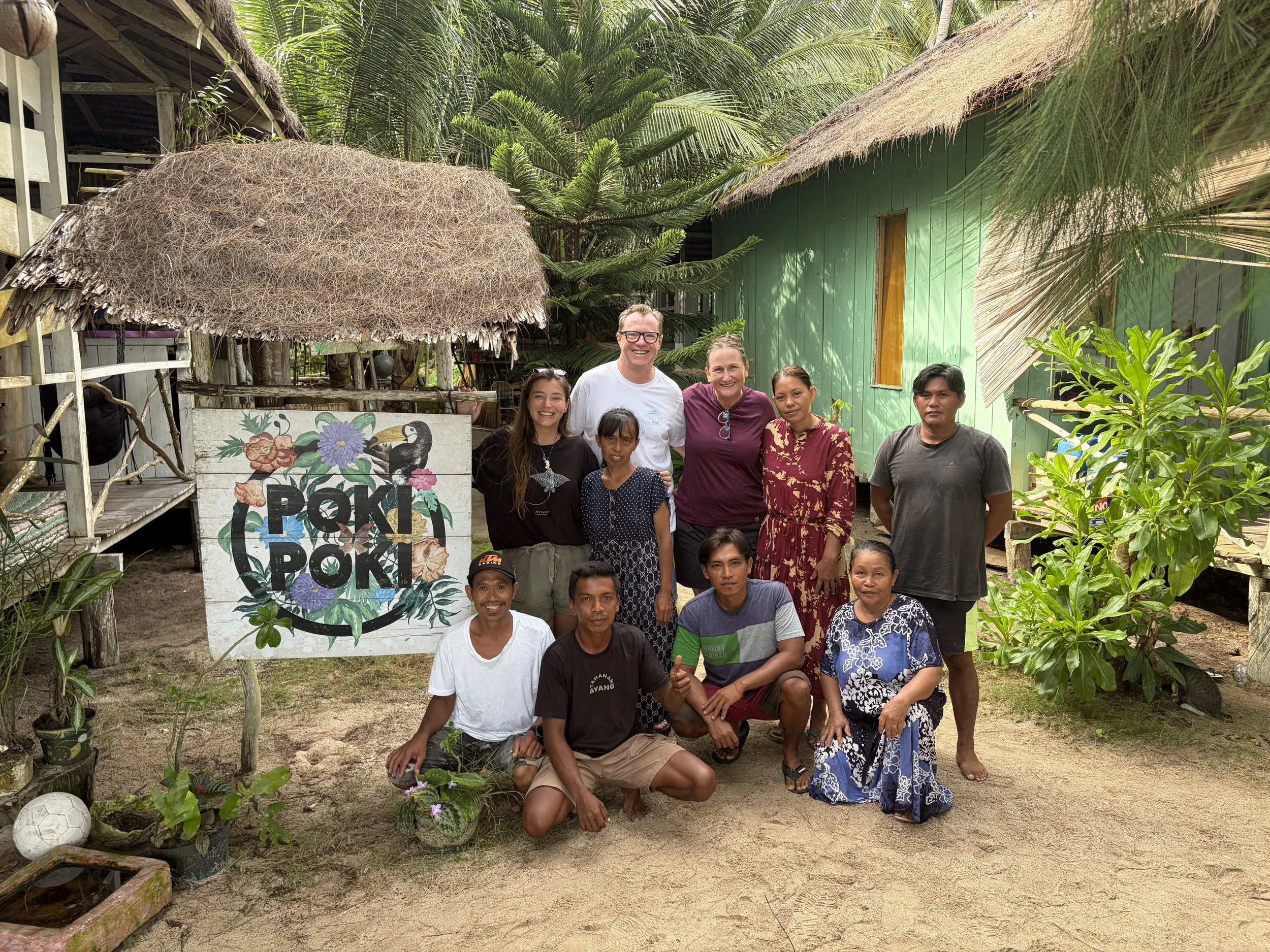
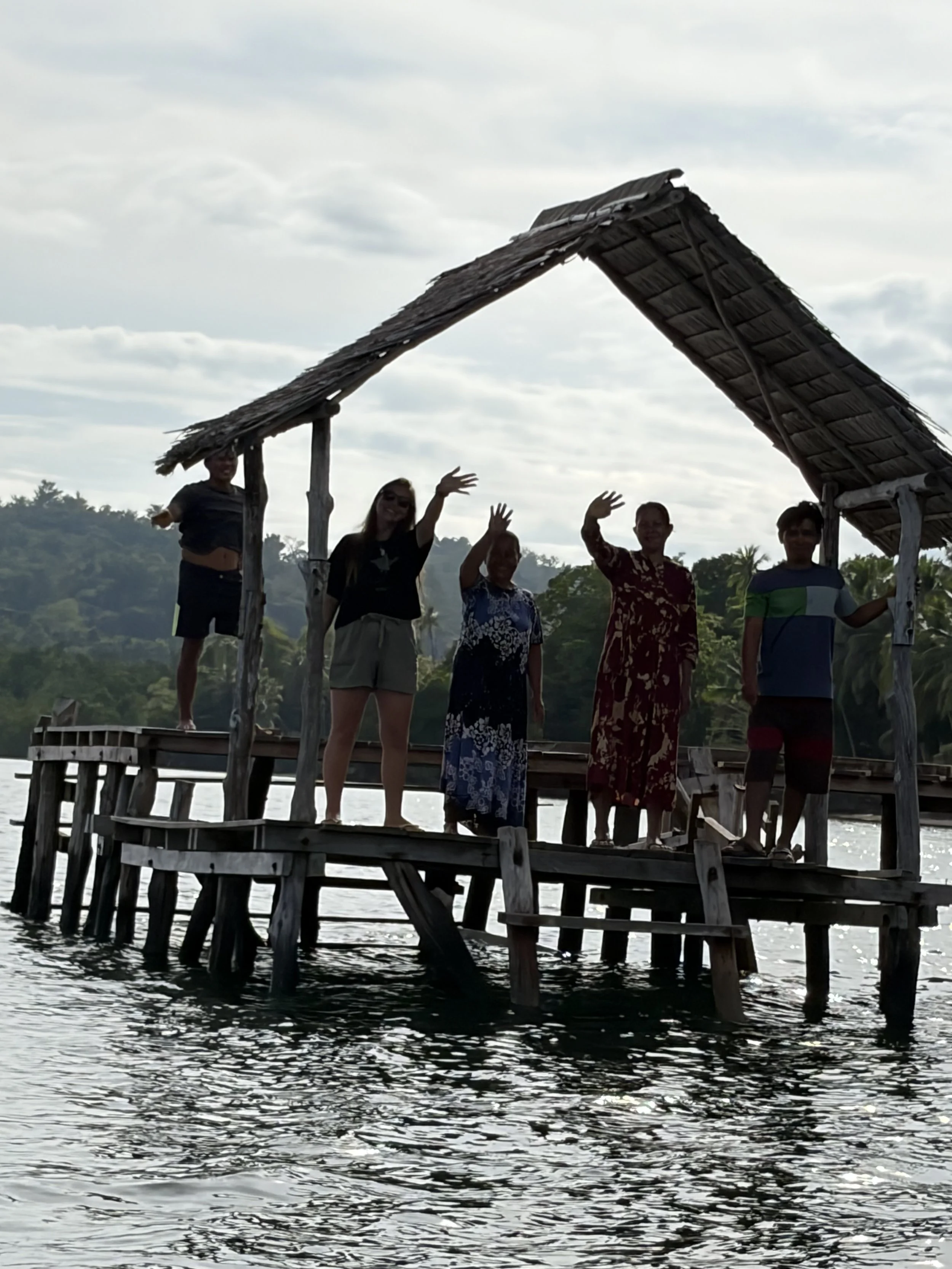
The team who looked after us at Poki Poki Cottages
Where to stay in the Togeans really comes down to what you want from your experience whilst there. For us, we aren’t divers, so that crossed a bunch of resorts off the list; what we were looking for was a homestay-style experience with access to amazing reefs for snorkelling and that was quiet enough to feel adventurous.
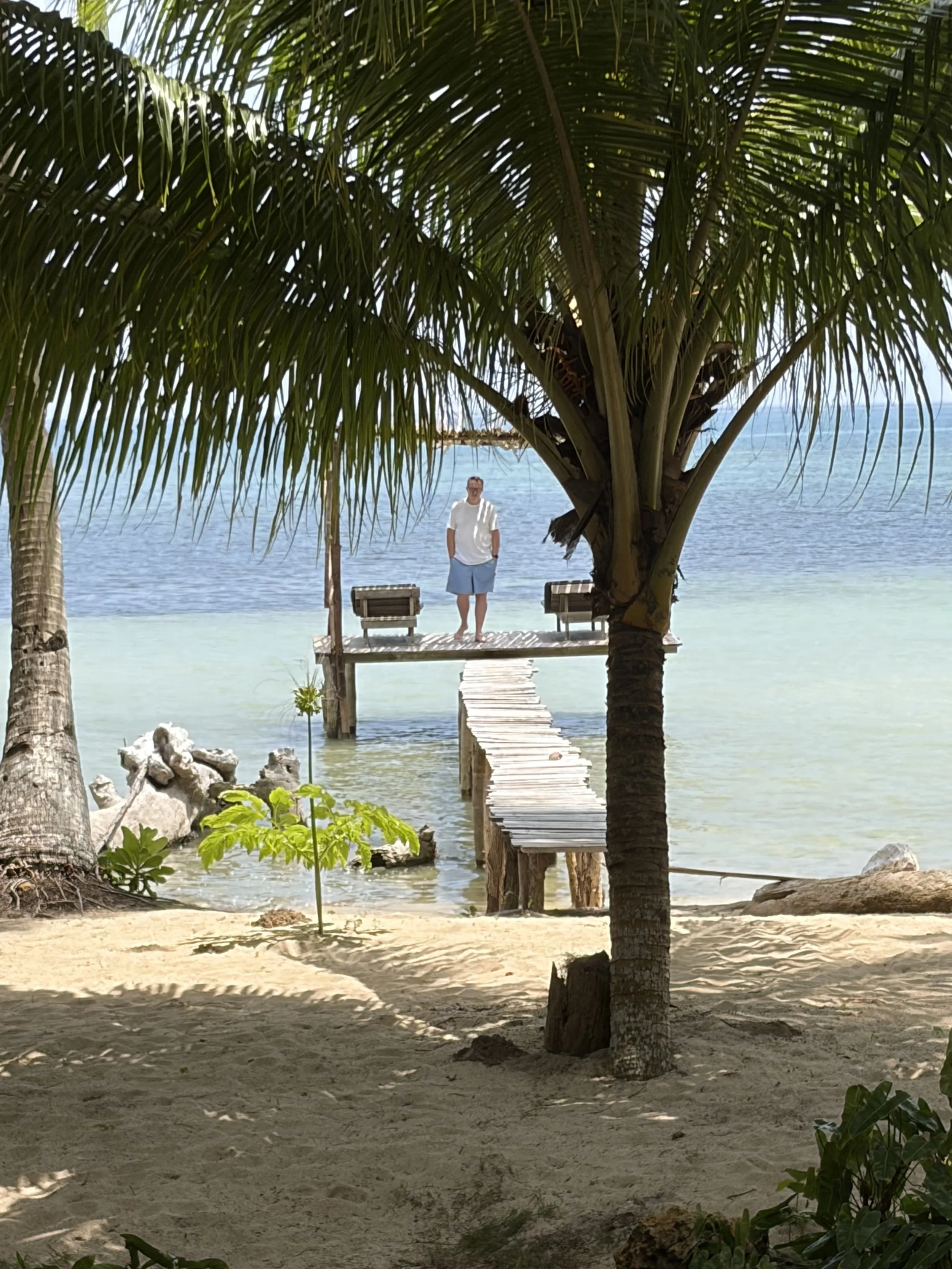
We chose to stay at Poki Poki Cottages, located near the village of Bomba. For us, this turned out to be a great choice; 95% of our stay here was perfect. The house reef is damaged, so for snorkelling off the beach it wasn’t great, but we really couldn’t fault anything else.
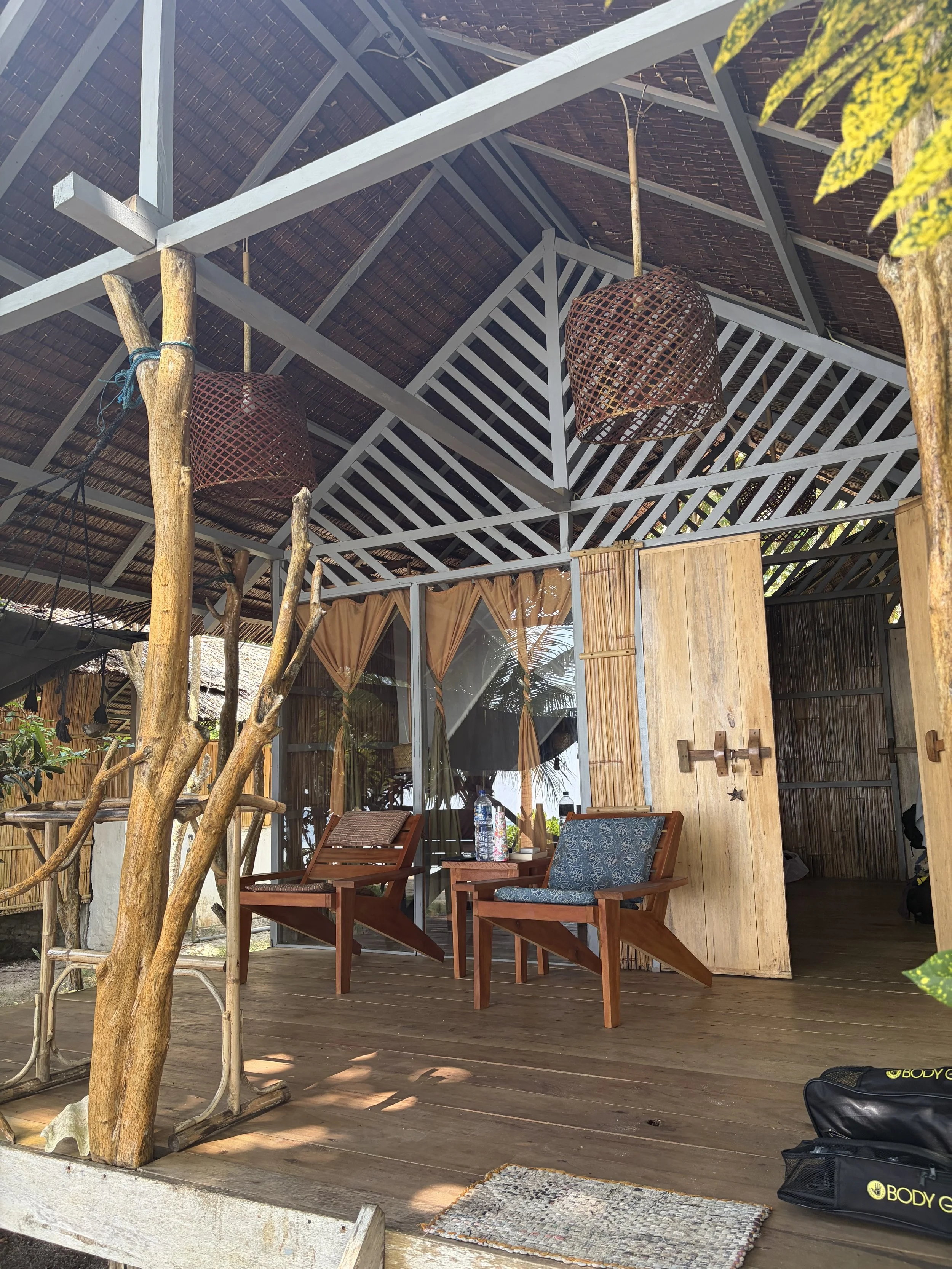
Poki Poki Cottages is located a short boat ride from the village of Bomba and offers a small grouping of bungalows on the beach. There is a main living/dining area for relaxing, which becomes the main hub in the evening when the power and the Wi-Fi get turned on.
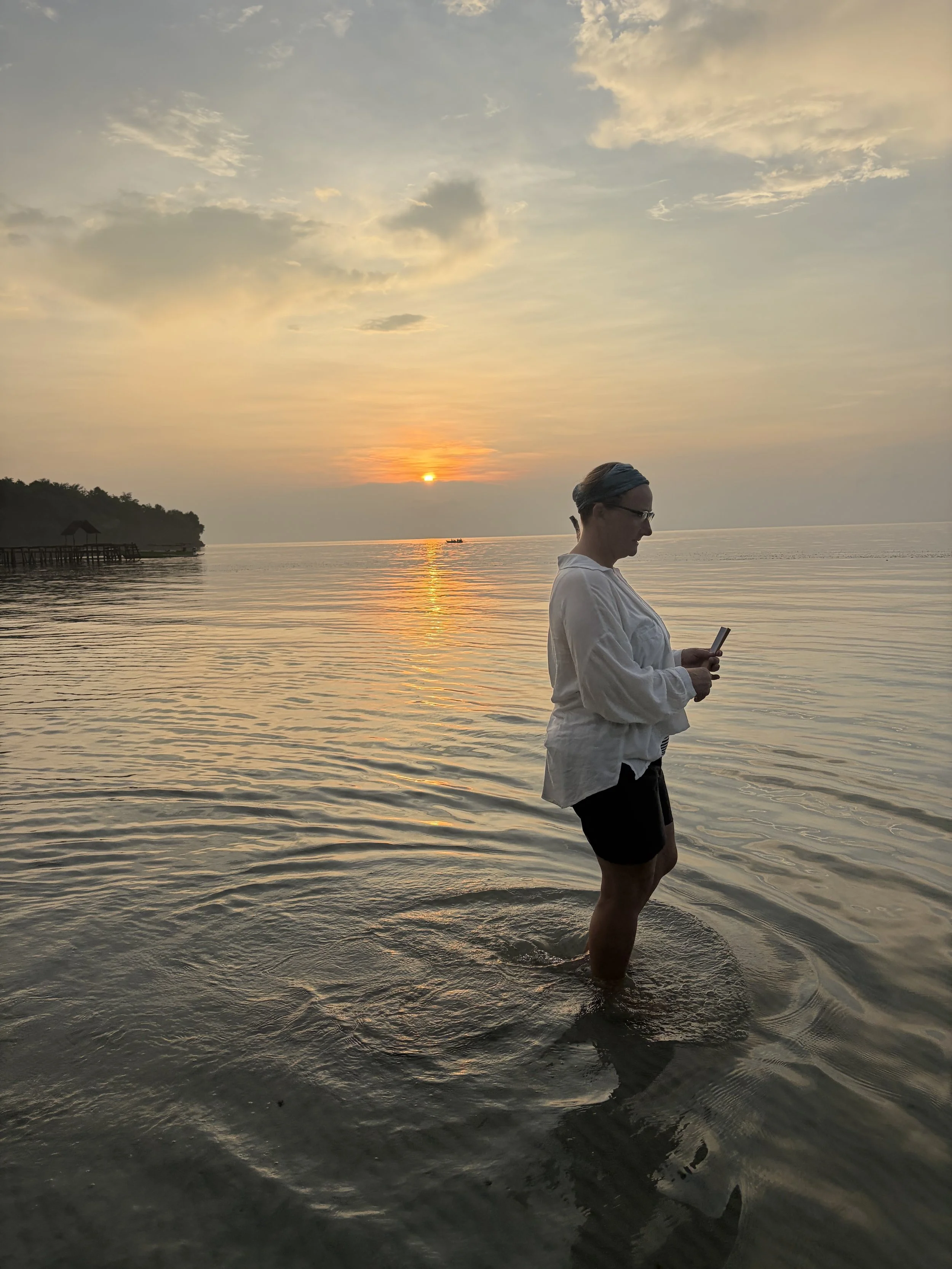
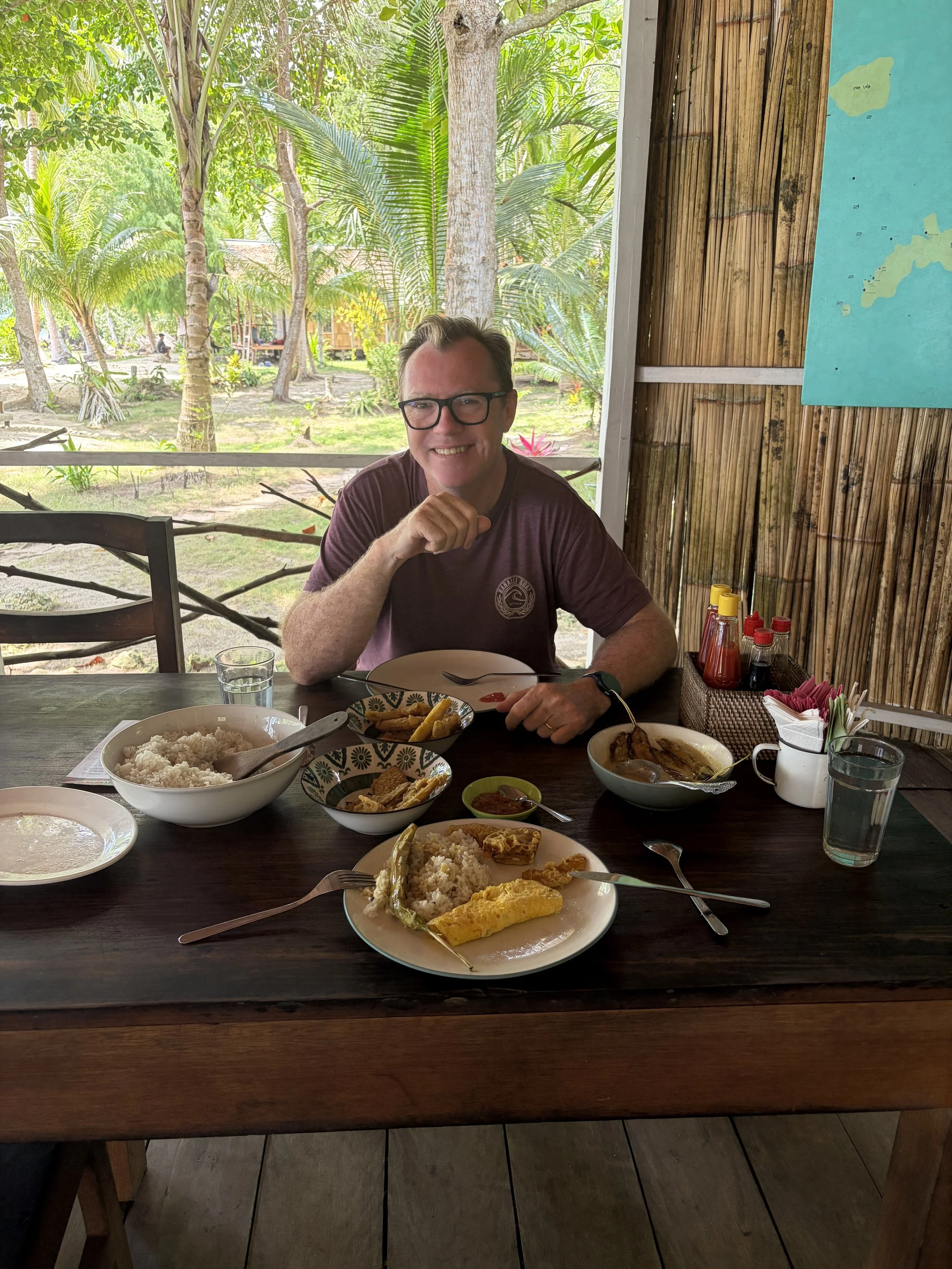
All of the bungalows have private bathrooms and include things like a bug net over the bed, storage space and a verandah with a hammock and seating to enjoy the amazing sunsets. All the meals are included in your stay and they cater for all types of diets. Jo is gluten-free and they made a real effort to look after her. The meals are really tasty, and we never had the same thing; it was always different. Mila, who is the chef, is lovely and her food is really tasty.
Because we stayed here for 7 days in the off-season, we had the run of the place for about 4 days before other guests arrived. The meals are all communal, so you get to eat with everyone and we made some lovely new friends from France and Germany.
Booking Details: Poki Poki Cottages
Practical information
Life here in these islands moves at a different pace from the modern world. Most of the islands have limited electricity, patchy to no mobile reception and have very few modern distractions. Some places like ours will have a generator to turn the power on at around 6 pm for a few hours and some may have wifi that will come on at this time as well.
There are no ATM’s so you will need to take the cash you will need for the trip unless your accommodation provider confirms with you that you can pay by card for some items. There is also limited access to everyday items at some of these resorts, so if you have a sweet tooth or love a snack, perhaps pack some stuff to take with you. We did a little supermarket trip in Ampana the night before we headed off.
Some Indonesian words to assist
Halo — Hello
Terima kasih — Thank you
Tolong — Please / Help
Ya — Yes
Tidak — No
Berapa harganya? — How much does it cost?
Di mana? — Where is…?
Kamar kecil / Toilet — Bathroom / Toilet
Hati-hati — Be careful / Take care
What to do in the Togian Islands?
This is an amazing place to go diving and although we aren’t divers ourselves, there are some good dive resorts in the area that will look after you. Poki Poki Cottages engages with Araya Dive Resort and another guest used them whilst we were there and had a great experience.
We took two tours from Poki Poki Cottages, which were offered by them. The first was just a snorkelling tour to some nearby reefs and the second one was by far the best. We took a boat out to a remote coral atoll and snorkelled on what was an immaculate reef. We then did a village tour of Tumbulawa and afterwards sat and watched the hornbill birds fly in at sunset. The hornbills are majestic birds specific to this area of Indonesia and sound like a drone when they are flying in. We got to sit and watch flocks of knobbed hornbills flying in to nest in the trees just as the sun was setting and it really felt like we were in our own nature documentary.
There are other tours you can take to places like Una Una (a volcanic island) and the jellyfish lake; however, we just weren’t able to make those work for us on this trip.
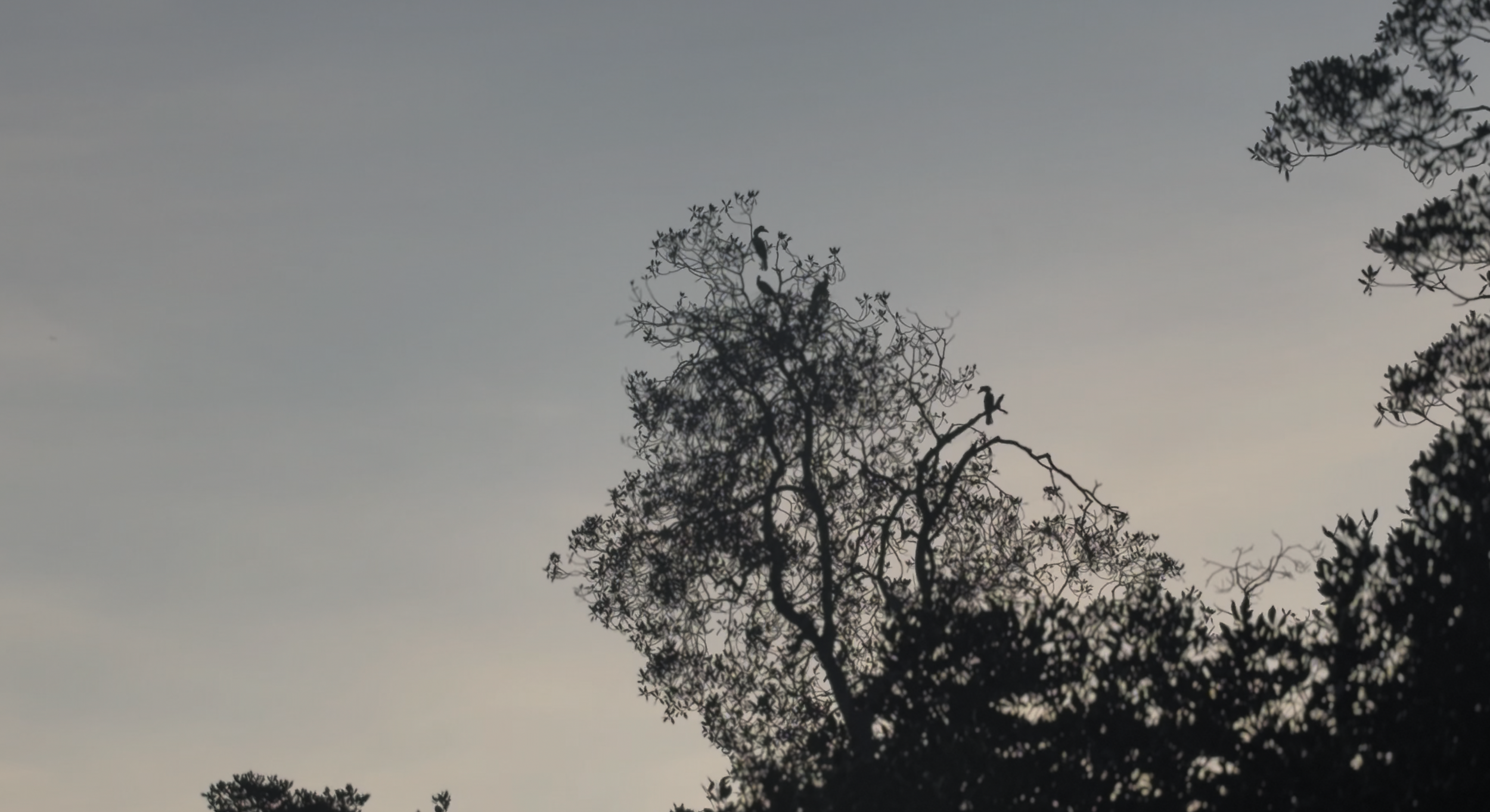
Watching the Hornbills fly in at Sunset Togean Islands
Other places to stay?
Our thoughts on the Togean Islands?
We really loved the time we spent at Poki Poki cottages and we will definitely go back to the Togean Islands again. We want to explore even more of this area and what it has to offer. When we go back again, we will probably book shorter stays, 3 nights at each location and move to some of the other islands via ferry. We are keen to get to Una Una Island and also visit the Bajau people.
If you’re chasing real adventure and hidden paradise vibes… the Togean Islands need to be on your bucket list.
What helps us when we are travelling?
E-Sims: Roamless
Travel Planner/Budgeting: Monday.com
Hotel Membership: ACCOR
Travel Card: Wise
VPN:Surfshark
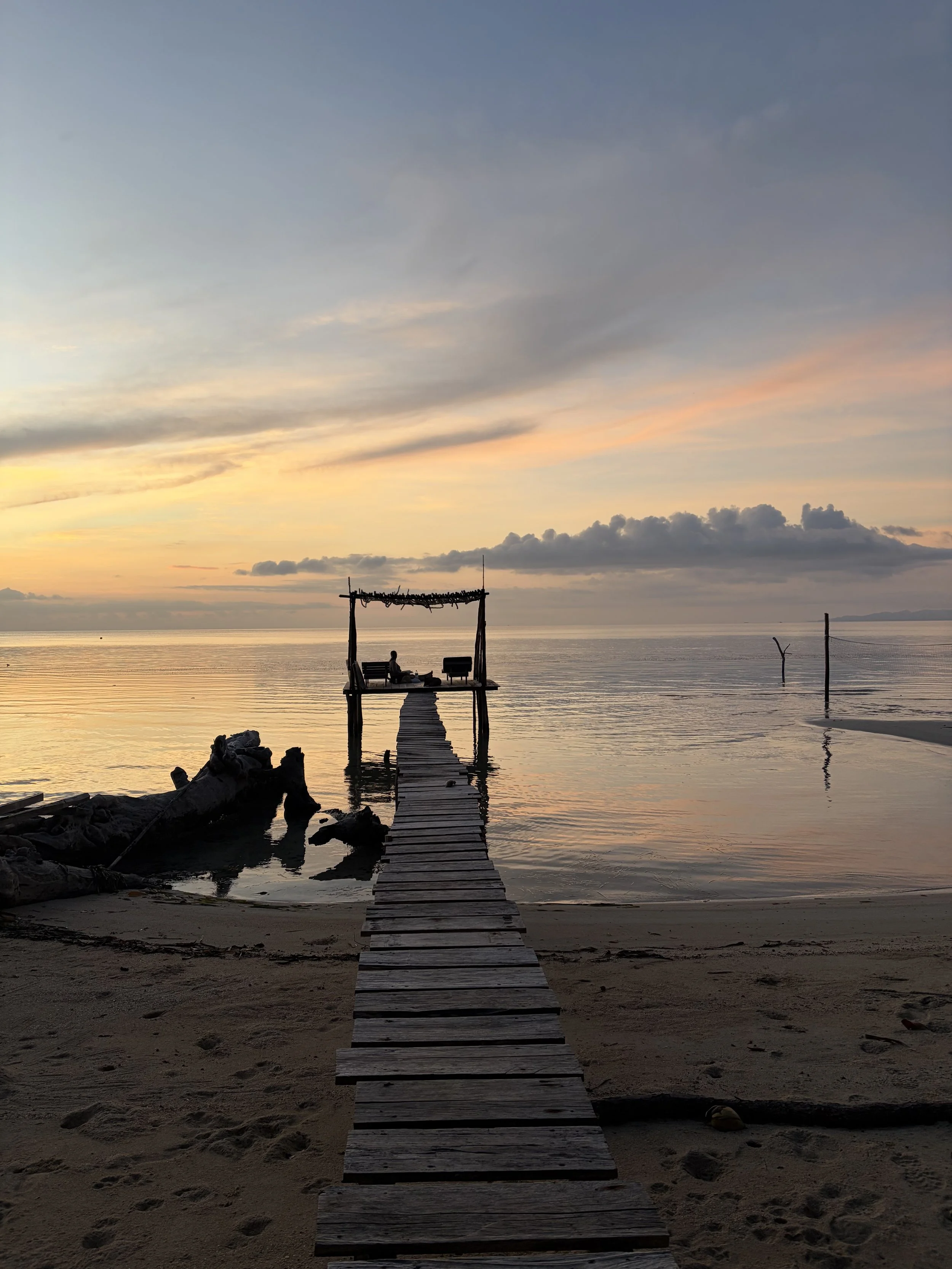
Relaxing at Sunset Poki Poki Cottages
To join us on our travels, be sure to follow along on our socials:
☕️ @billandjo
